The Starbucks turnaround is happening one customer connection at a time
Customers are responding to Starbucks emphasis on an exceptional cup of coffee, human connection and a great customer experience — and the business’s performance is as well.
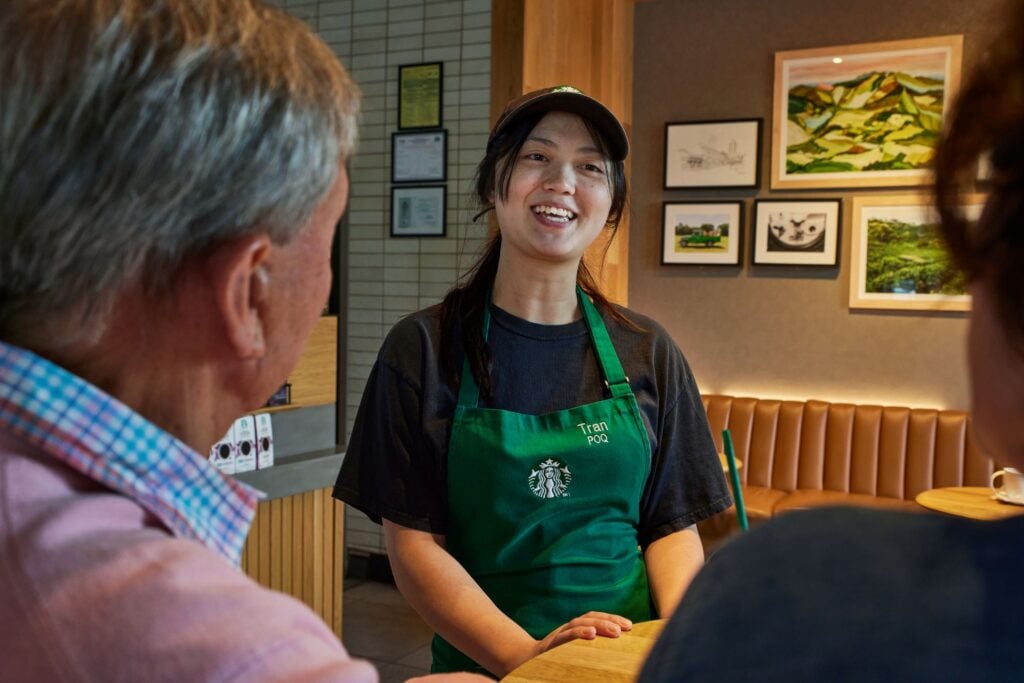
In an age when an unprecedented amount of life takes place online, and a record number of people report feeling lonely and disconnected, Starbucks has doubled down on human connection and customer service.
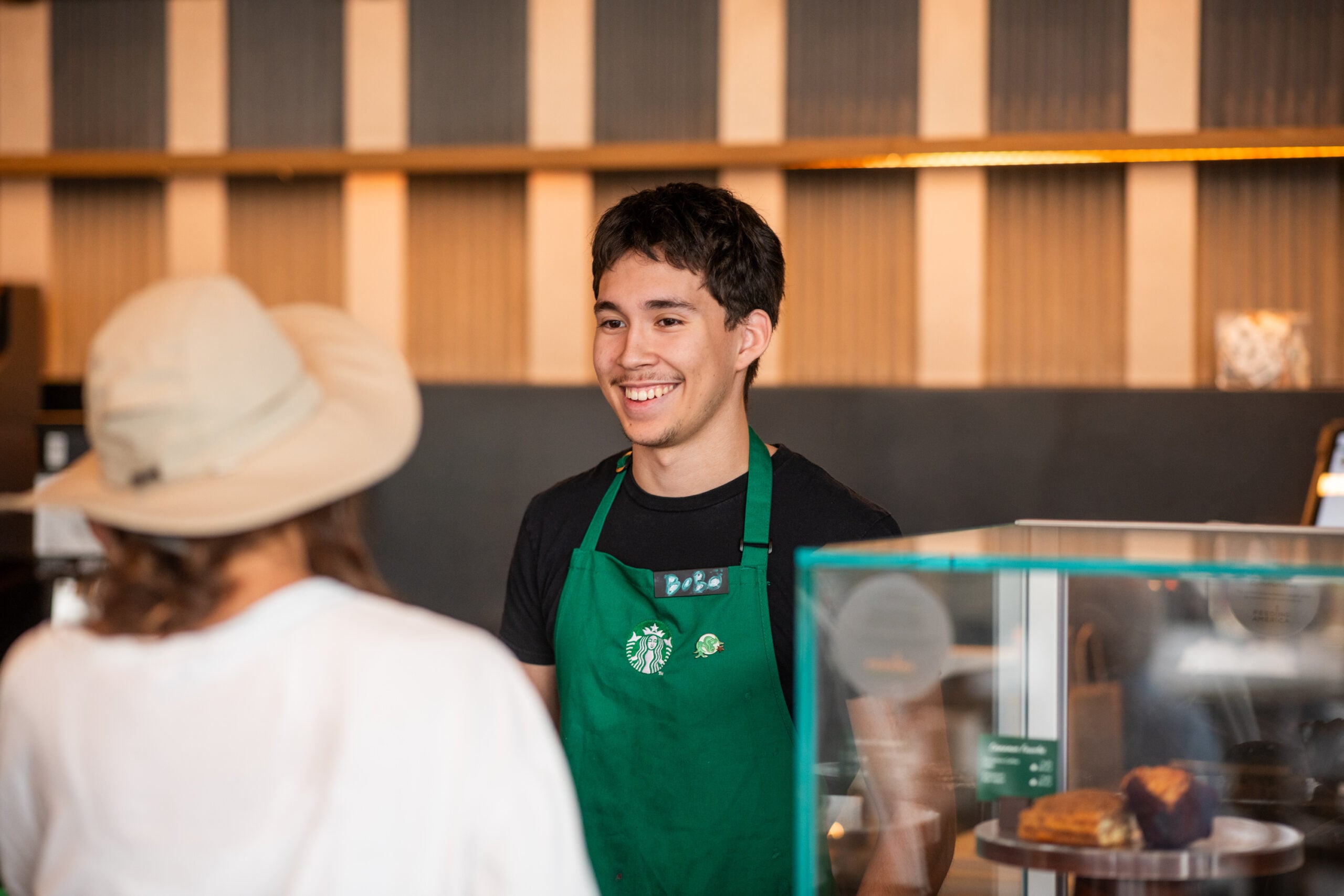
A warm welcome. Eye contact. Knowing customers’ names and regular orders. Treating each order as an interaction rather than a transaction. Being there with a comforting word for someone having a hard day, or with a high-five for someone else celebrating a milestone — a tee-ball victory, a job interview, a birthday.
“Many are cynical about this being lip service and management speak but I have seen a great improvement from many of the stores I have visited,” wrote customer Nicholas Fox from New York City. “An engaged staff, with more people to serve at busy times and real interactions with customers — full of humanity.”
Investing in the customer experience was a big part of the “Back to Starbucks” plan, which was built on the belief that an exceptional cup of coffee, human connection and a great customer experience “win the day, every day,” said Brian Niccol, Starbucks chairman and chief executive officer.
“Our third quarter results prove they do,” Niccol said. “We’re relentlessly focused on reclaiming the third place and becoming the world’s greatest customer service company.”
Results after a year of ‘Green Apron Service’
It’s been a year since Starbucks launched “Green Apron Service,” an initiative aimed at creating more warm, welcoming and personal coffeehouse experiences by giving baristas the time, tools and support they need to prioritize craft and customer connection.
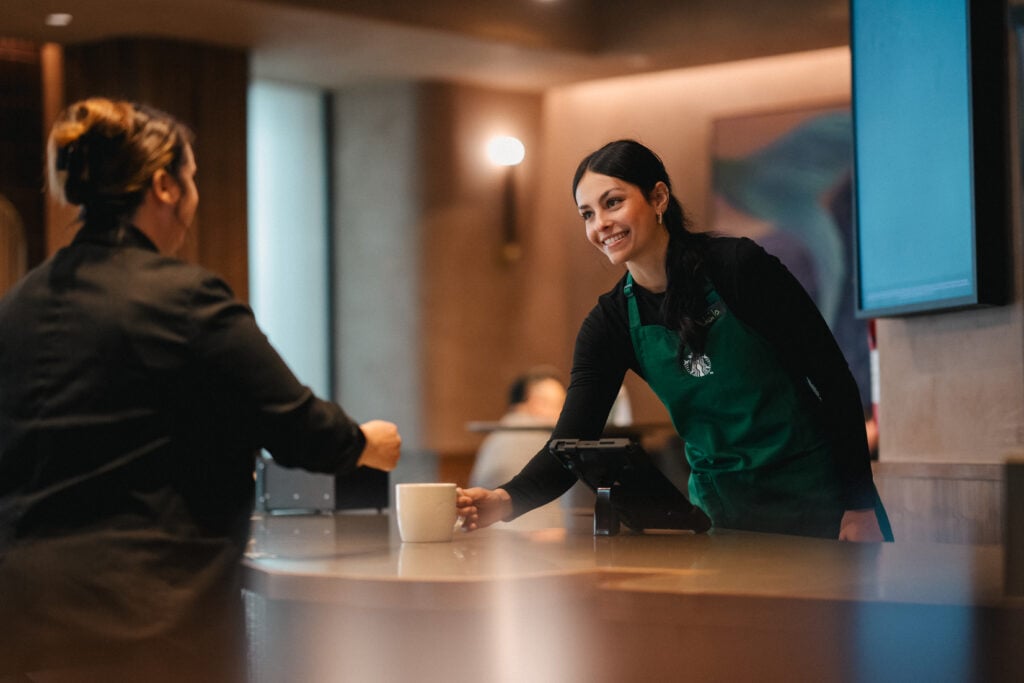
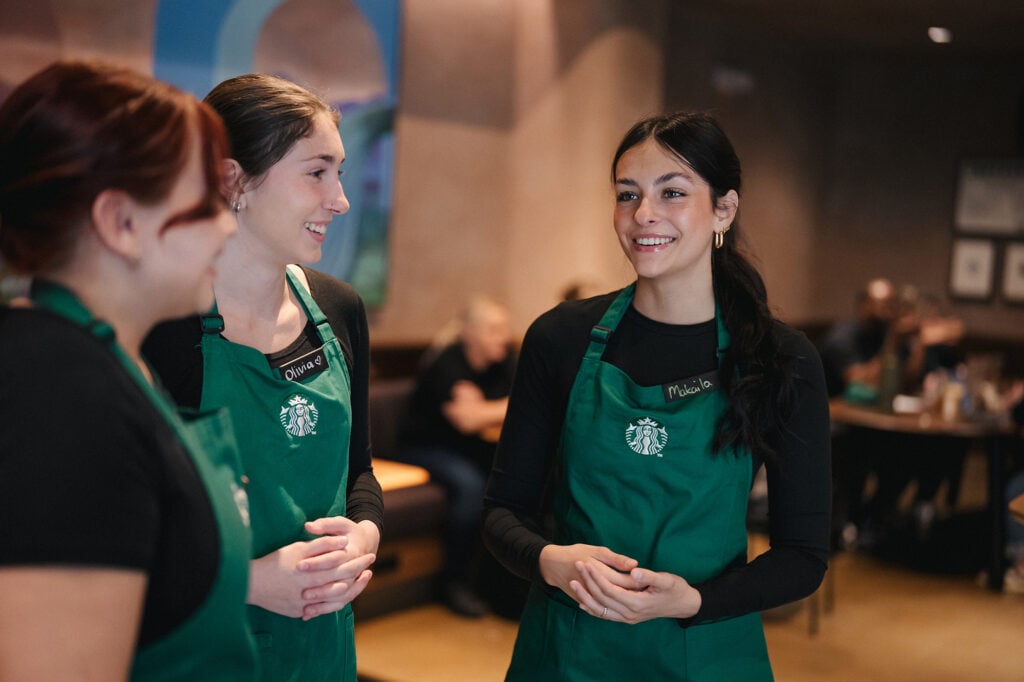

It’s working. Starbucks has now delivered four consecutive quarters of positive global comparable sales growth and the second straight quarter of expanding profit margins.
In North America, as more customers return to Starbucks and feel the difference, comparable sales climbed more than 8% last quarter — the best performance in nearly three years.
A turnaround customers can feel
But beyond the numbers, what is most important is that customers say they can feel the difference at Starbucks coffeehouses.
Vladimir, in Chino, California, said he’d moved on to a different coffee shop when a friend told him to give their neighborhood Starbucks another chance.
“The turnaround is nothing short of incredible. The exterior and parking lot are clean, the patio is welcoming, and the team inside is exceptionally friendly,” he said. “Most importantly, our drinks have been absolutely perfect. Because of this transformation, my wife and I have completely returned to the fold — we visit multiple times a week … We commended (the coffeehouse leader, Bobby) directly on the remarkable shift, and his humility and dedication to customer feedback made it clear why this location is thriving.”
Investing in partners and partners investing in customers
A relentless focus on customer service requires significant investment, including $500 million for additional staffing in coffeehouses and rebuilt scheduling so more baristas are on the floor during peak busy times. In addition to business performance, the payoff is showing up on the partner side as well — hourly partner turnover is less than half the industry average, 95% of partners say they’re getting the hours and schedules they want and the number of shifts that are fully filled is at record highs.
“Partners are the heart of Starbucks, and our competitive advantage. When our partners are set up to deliver a great experience to millions of customers, Starbucks grows,” said Mike Grams, executive vice president and chief operating officer, earlier this year.
Also notable: Taking time to connect with customers has not come at the expense of speed; customers are getting their orders increasingly faster. Today, with the support of Smart Queue, our coffeehouses are meeting our promise to hand off cafe and drive-thru orders in under four minutes and to have mobile orders ready for pickup on-time, every time. Coffeehouses are also welcoming more customers, with visits up 4.5% from last year.
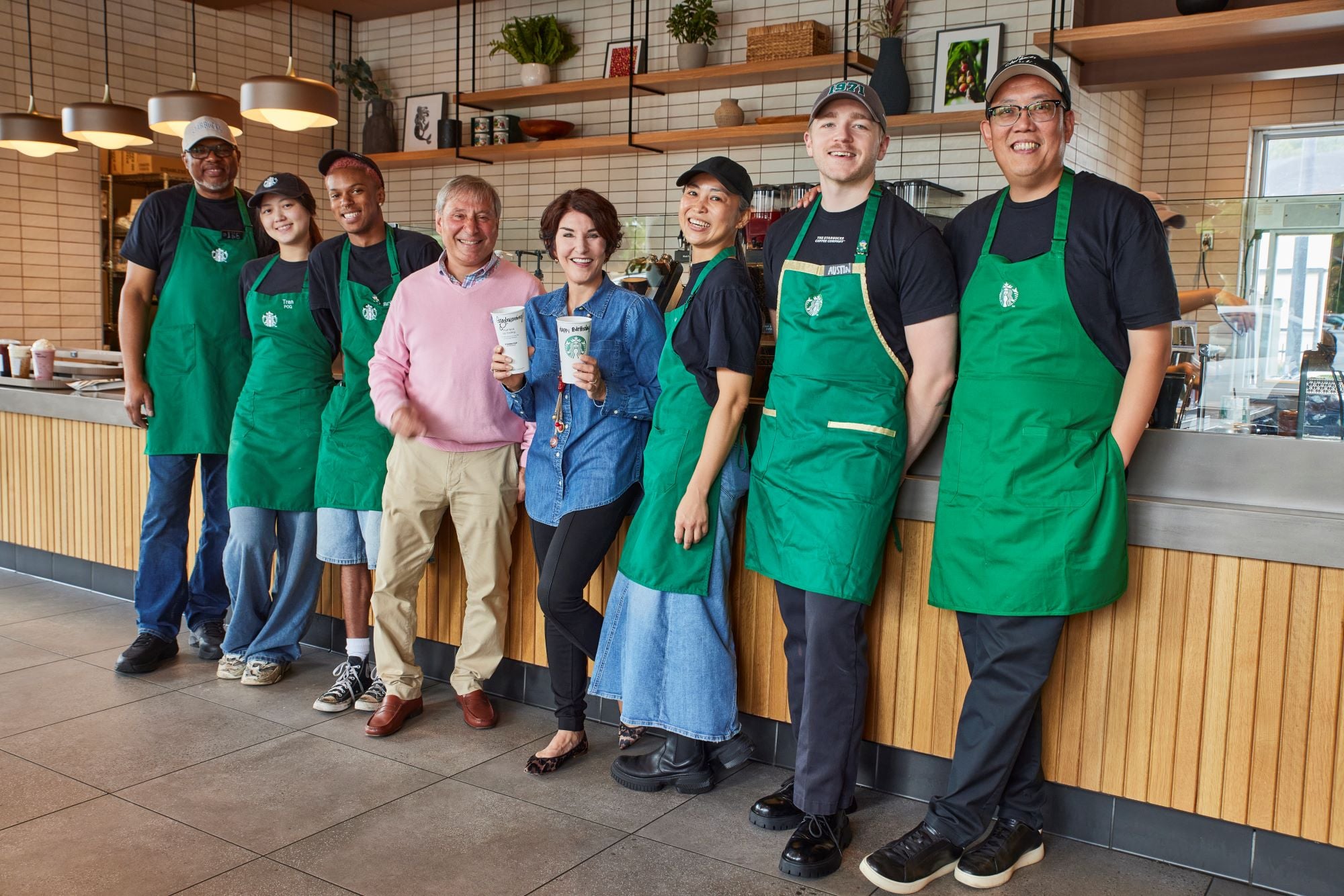
Austin M., a coffeehouse leader in Chamblee, Georgia, near Atlanta, and his team have a busy coffeehouse, often with 1,200 to 1,400 transactions a day. But yet, they know their regulars — the group of older men who gather each morning for their black coffee, the teens who come in after school for their Refreshers, the running group that sometimes stops by. Austin and his team see life unfold each day in their coffeehouse and try to make all their customers feel welcome.
“Coffee is a huge part of society in the way it brings people together,” said Austin.
As Starbucks leaders reiterate to both partners and customers, the success of Starbucks, the magic formula, has always been rooted in the connection between partners and customers.
“Partners are the heart of Starbucks, and our competitive advantage. When our partners are set up to deliver a great experience to millions of customers, Starbucks grows,” said Mike Grams, executive vice president and chief operating officer, earlier this year.
What that connection looks like is different in every coffeehouse and for every team and every partner who wears the green apron.
Sometimes those relationships are built over years of daily visits. Other times, they take shape in a single conversation. Read on for some of those stories:
Care in a cup
Two of Austin’s favorite customers at his coffeehouse are Marco and Lesli Seta, a local couple who have been visiting their coffeehouse daily for years.
They frequently came in together, but Austin noticed it had been a while since he’d seen Lesli with her husband. Marco would still order Lesli’s favorite drink to bring home to her, a Grande Americano in a venti cup, a half-inch of steamed half and half, extra whipped cream with a dash of cinnamon, but no Lesli. When Austin asked, at first, Marco joked that she was working and sent him as her intern instead but eventually shared that she had cancer and was undergoing treatment.
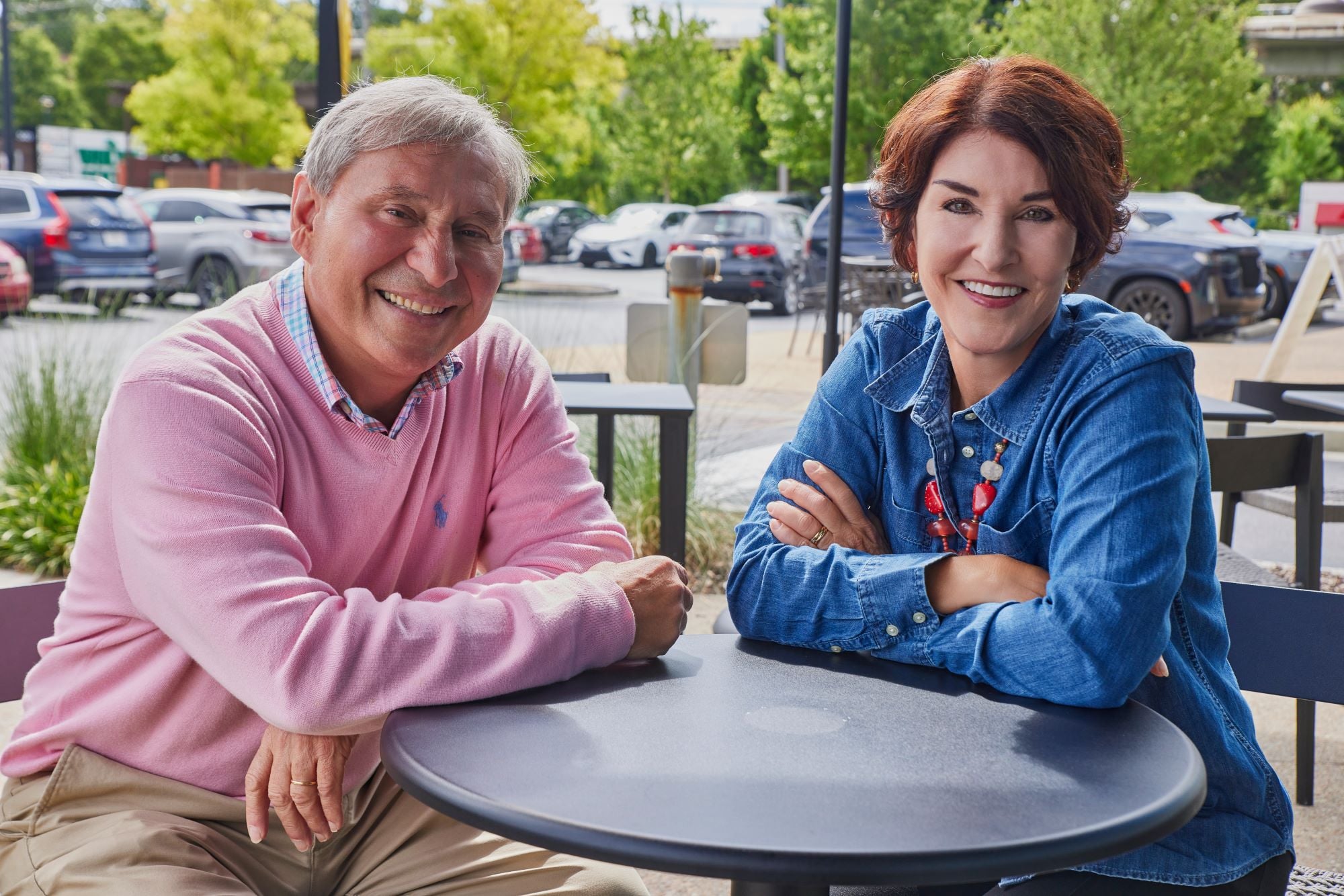
“They all know me and I love them,” said Lesli on a recent afternoon. “They are family.”
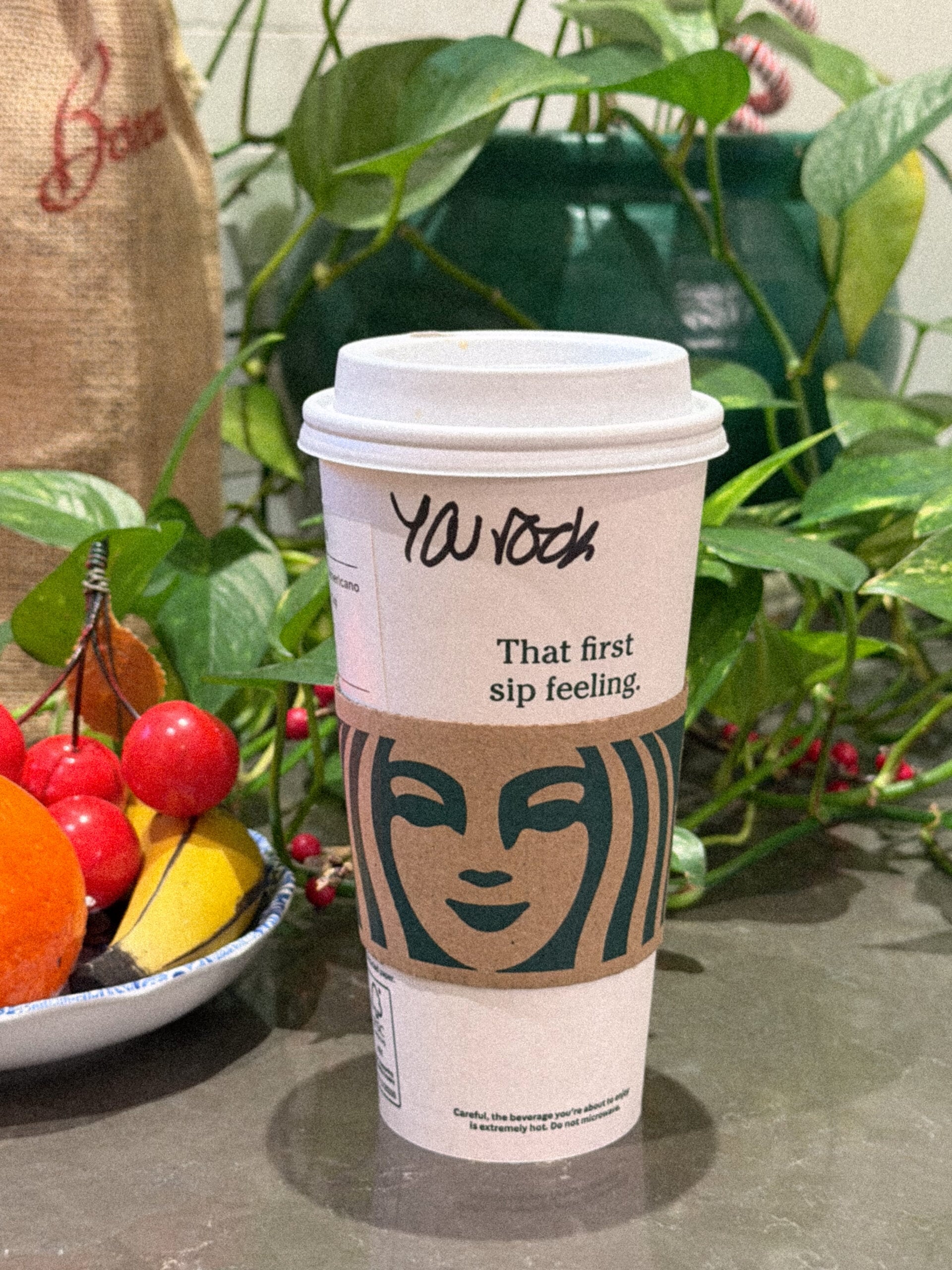
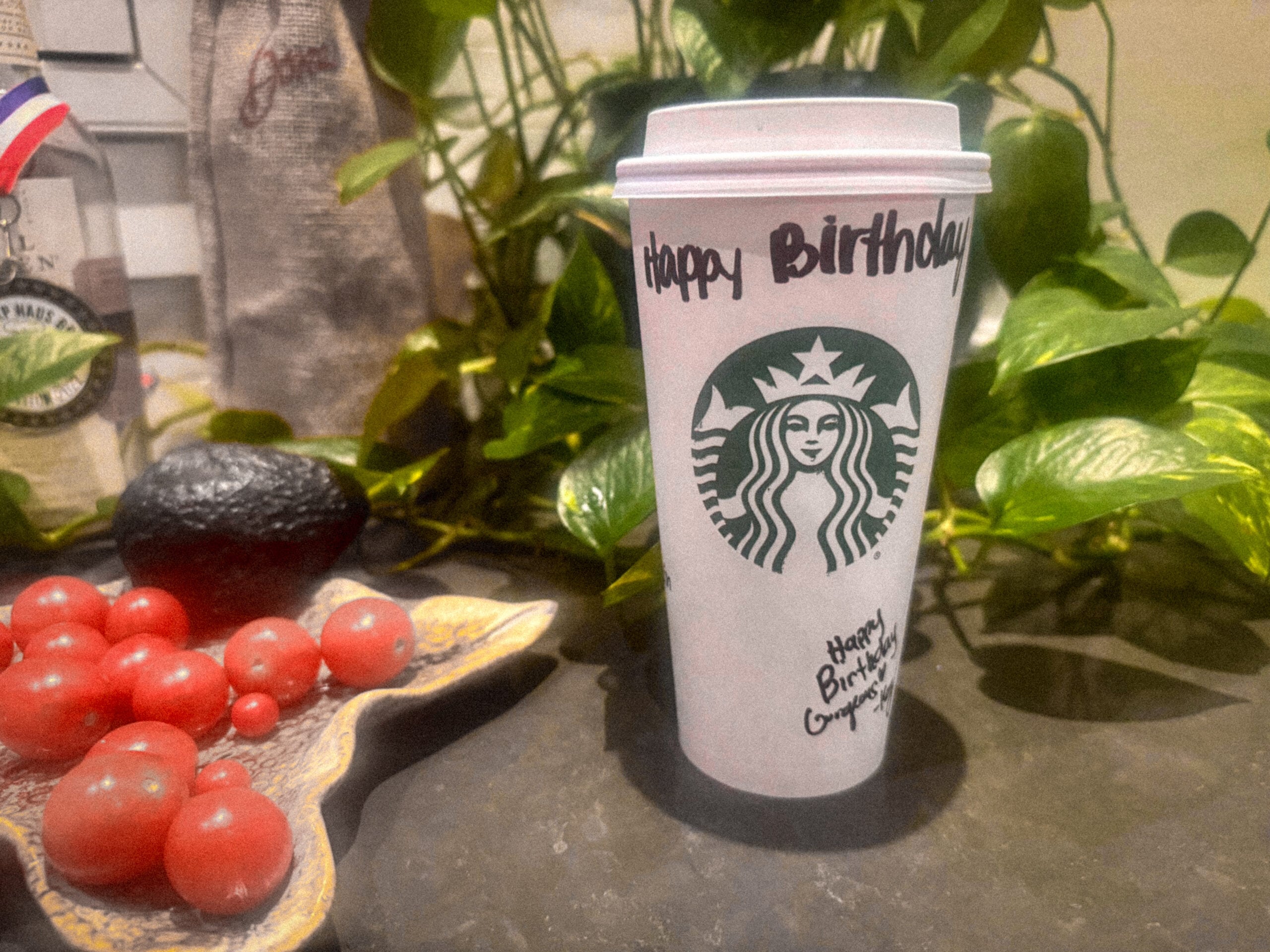
The coffeehouse team wanted to make sure Lesli knew they were thinking of her and so started writing special notes of encouragement on her cups. When her birthday came around, they all signed her cup to mark the occasion.
“I have it right here in front of me,” she said. “It’s signed by K, Bryan, Lizzie, Lee, Austin … all of them.”
Leslie saved some of the special cups, including her birthday cup, and has taken photos of all of them that she keeps in a folder on her computer in a file labeled “happy stuff.” Along with photos of her family, the pictures of cups rotate through as her screensaver images, an ever-present reminder of the partners who wrote the messages.
“They all know me and I love them,” said Lesli on a recent afternoon. “They are family.”
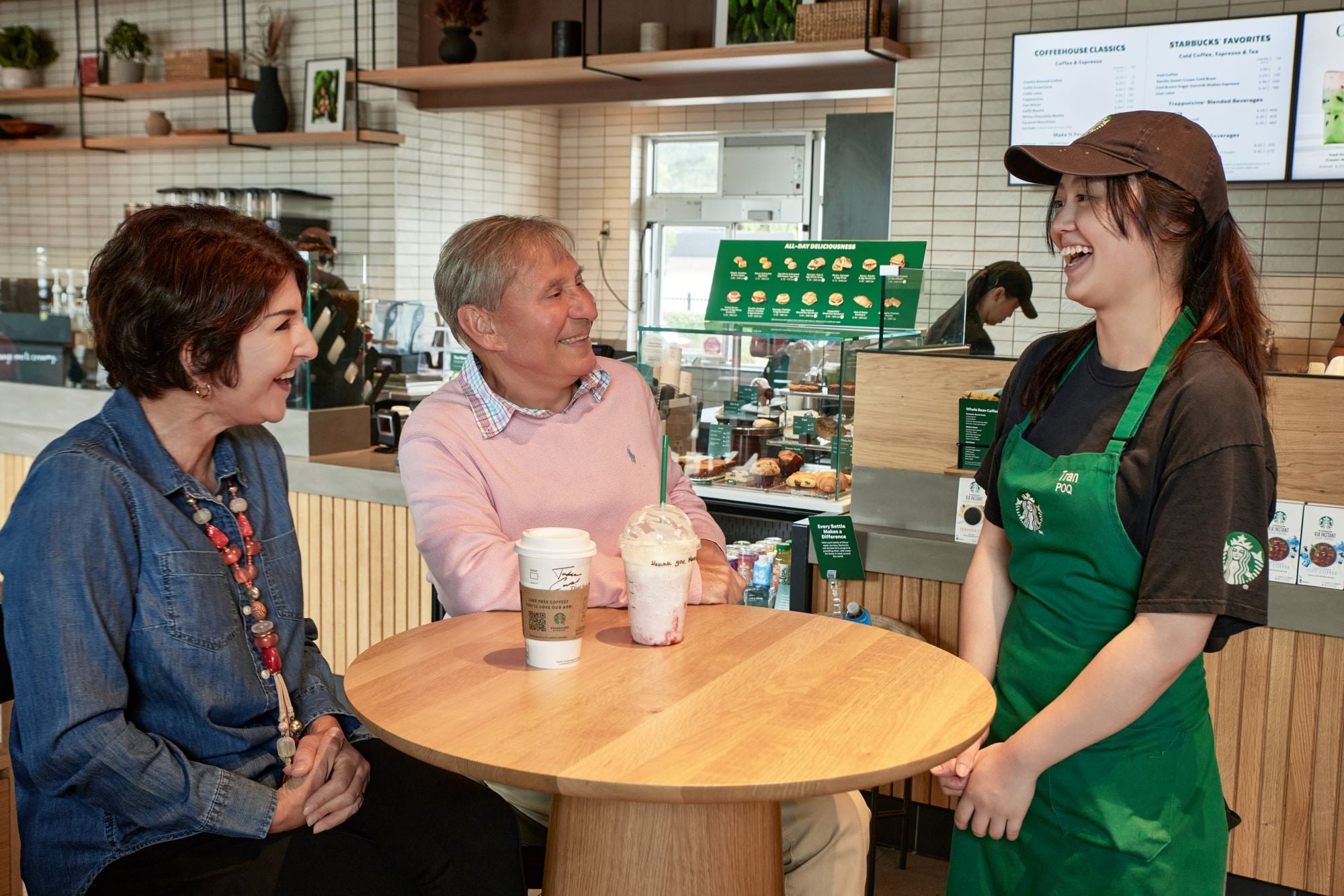
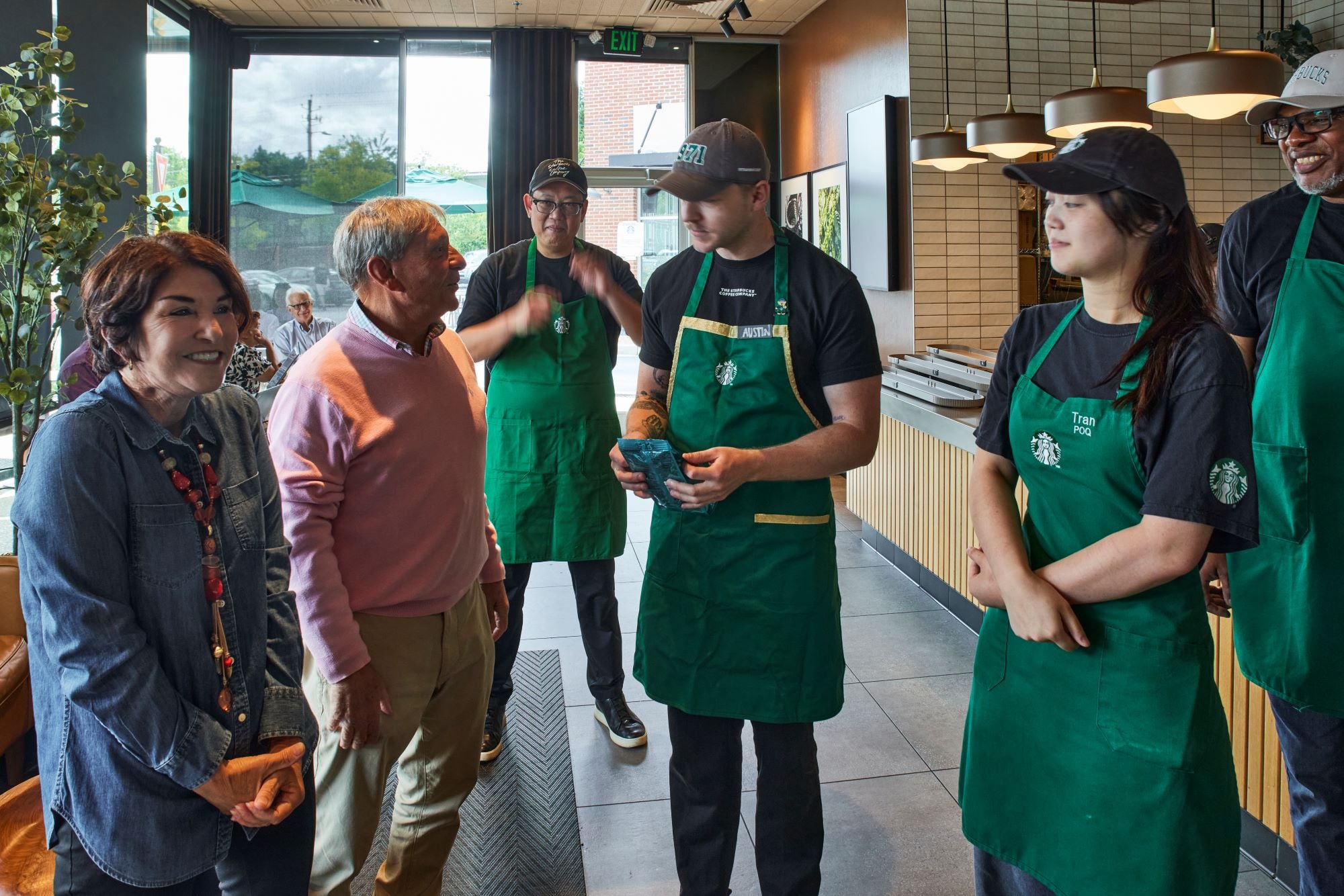
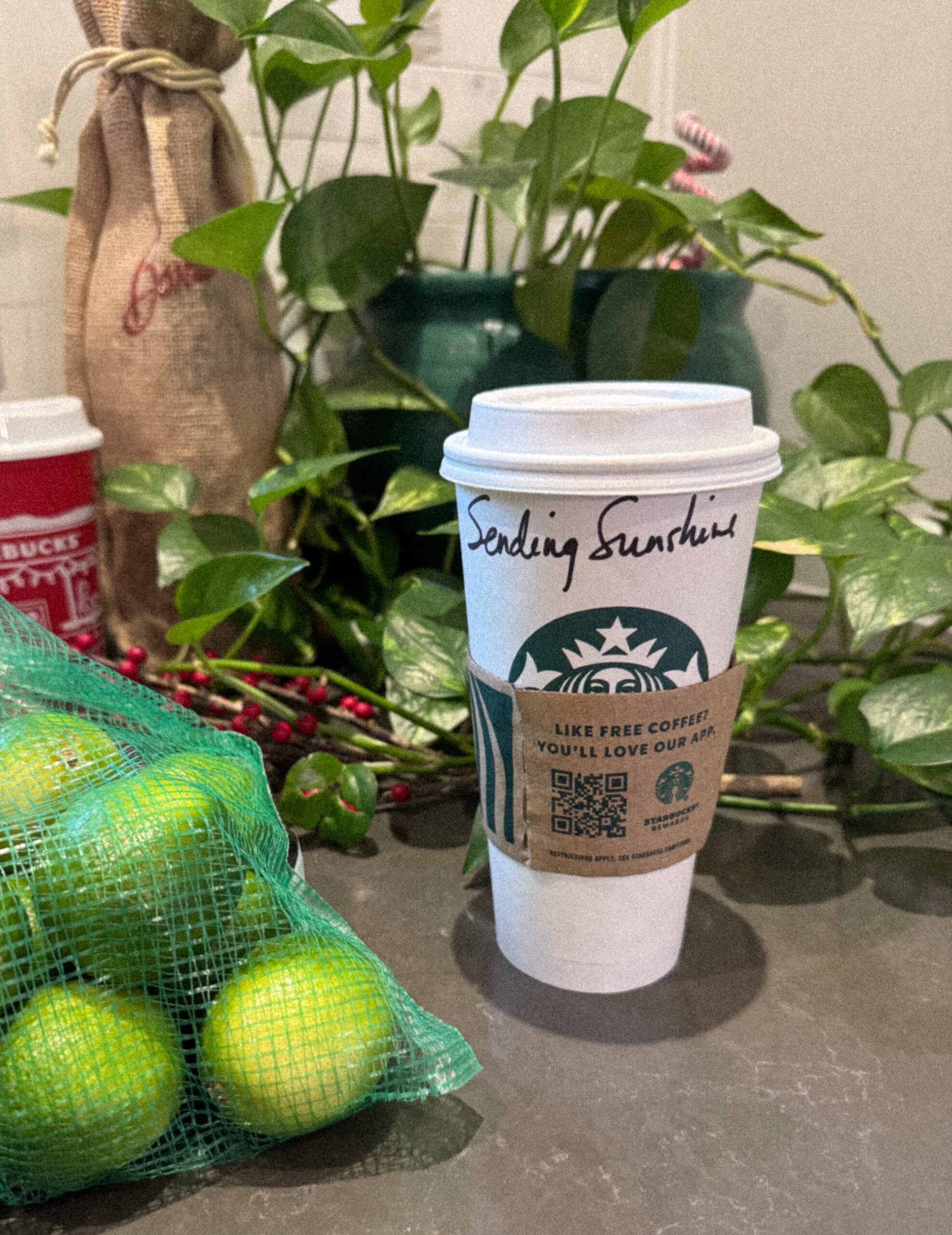
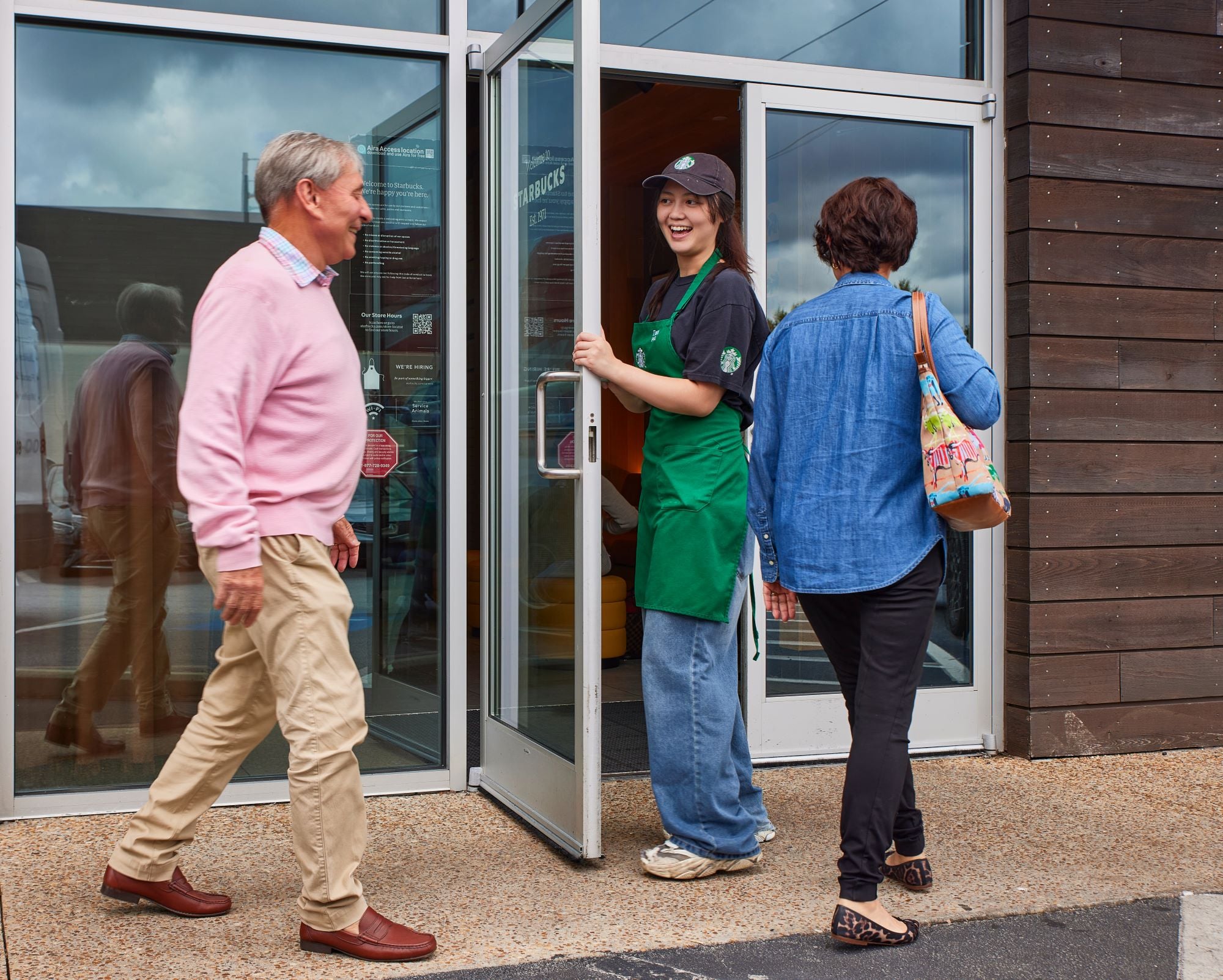
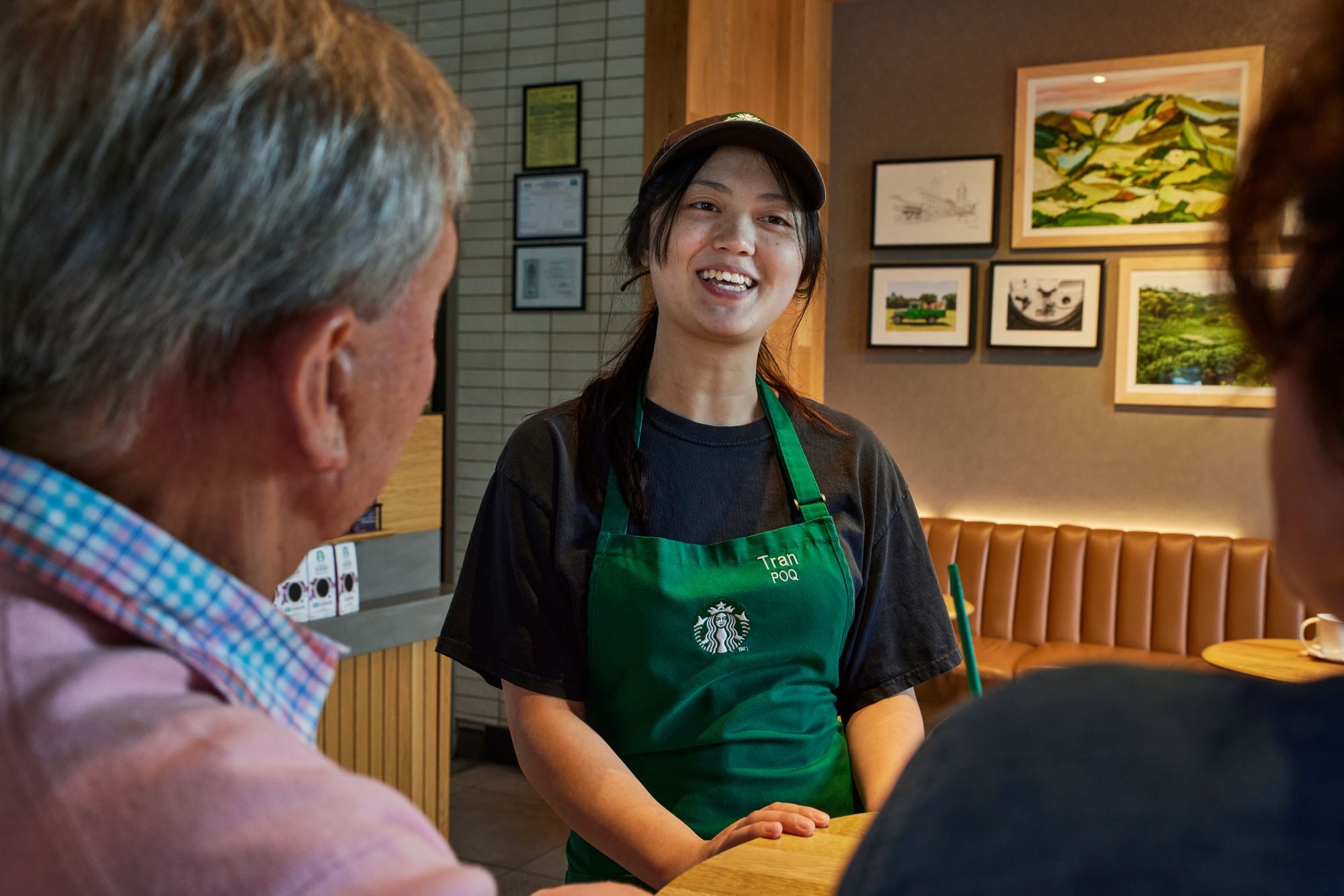
Lesli has now finished treatment and says, “I’m doing great!” When she was finally able to go back to the coffeehouse and see the partners, it was a joyful reunion. One of the baristas, Tran, who had written many of the messages on cups, was off that day, so she left her a note back saying thank you.
These days, on most mornings her husband drops their teen sons off at school and then stops at Starbucks to pick up her coffee. He brings it to her in her office. “There’s always a special note on my cup from them,” she said.
‘The brother I needed in that moment’
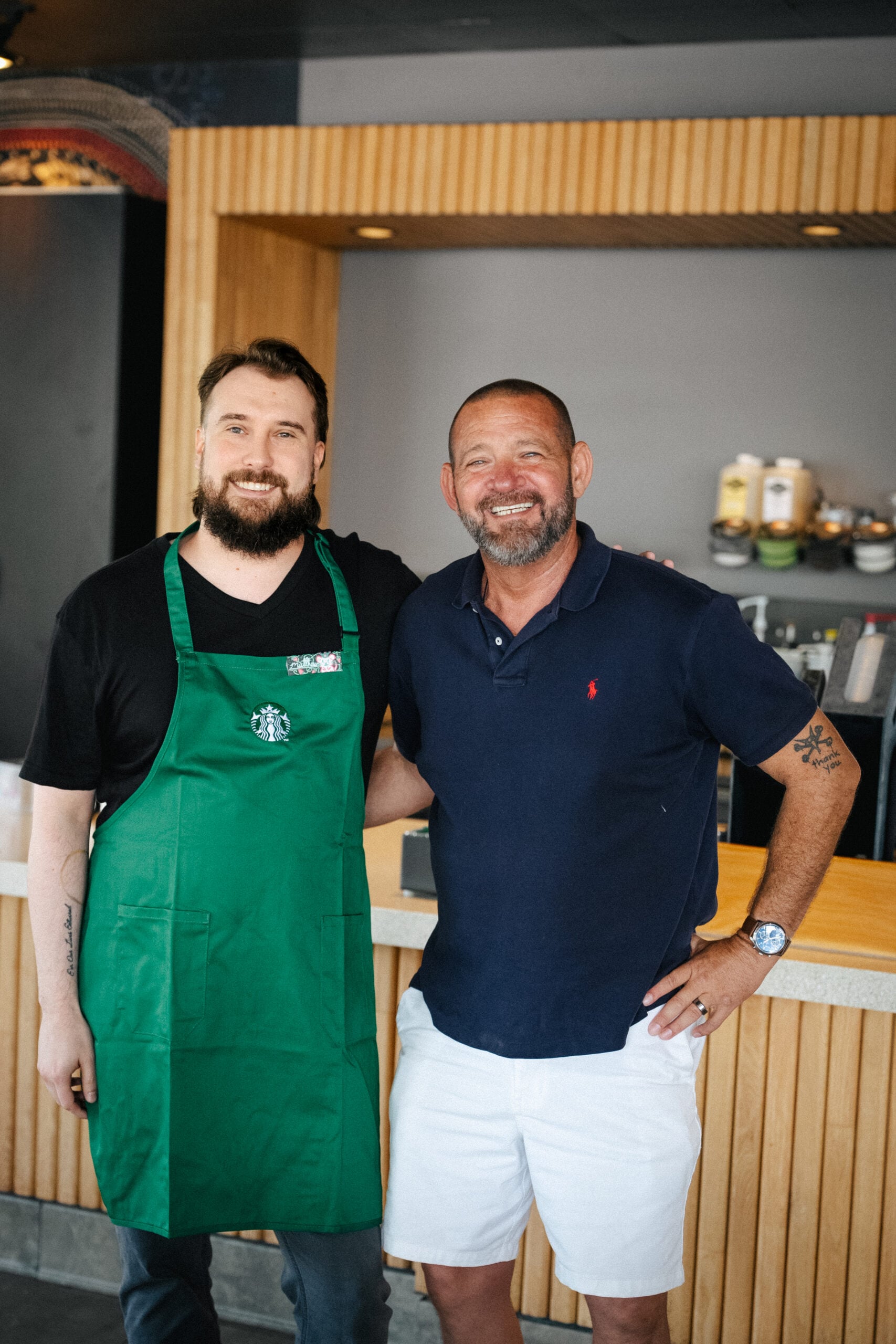
Matthew M. knew something was wrong the moment he saw Sean Harrell get out of his car in the parking lot of the Starbucks in Bellevue, Tennessee where he’s a barista.
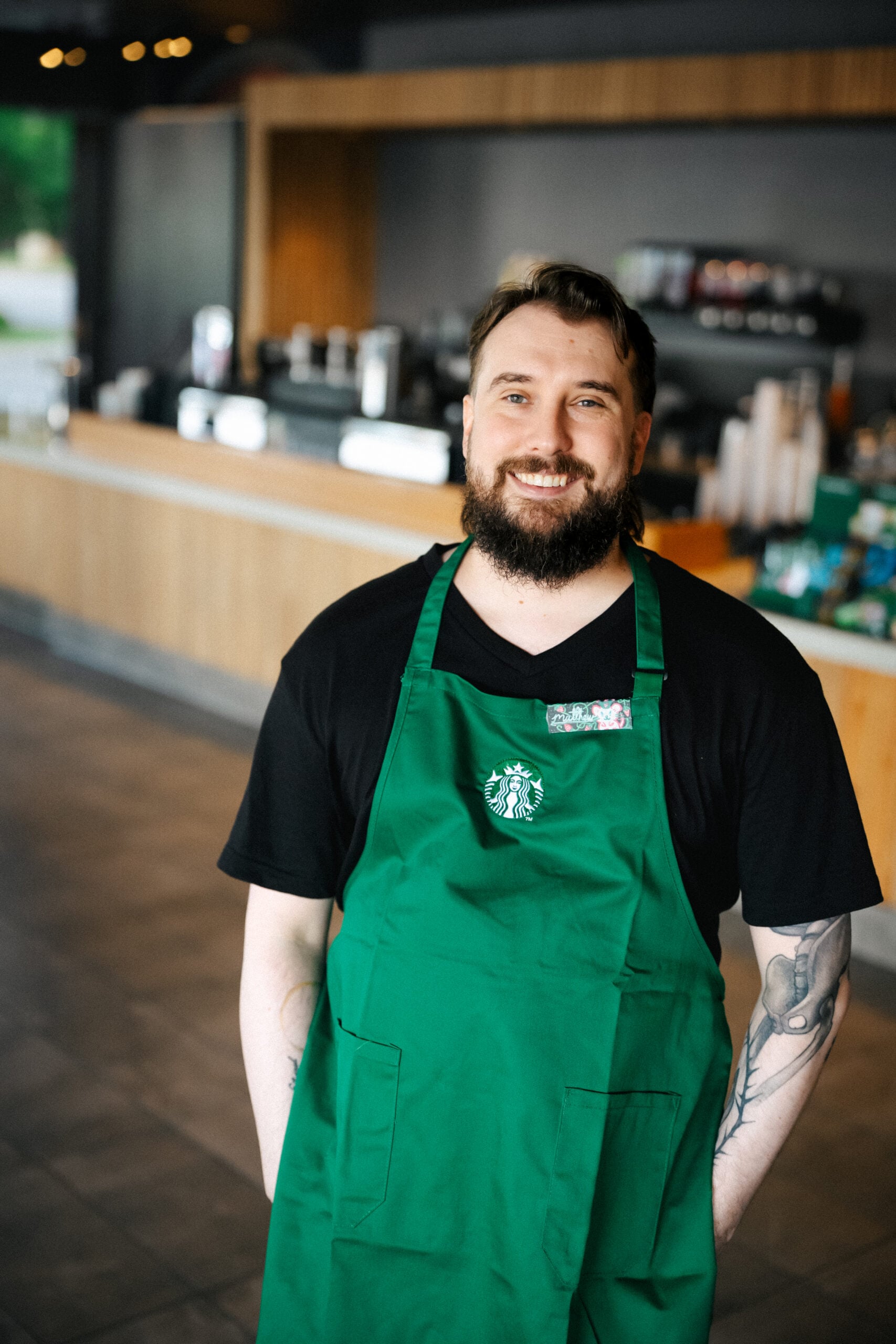
Anytime somebody feels safe enough to be vulnerable, I’m going to try to have a real conversation with them.”
Matthew M., Starbucks barista.
Harrell is one of his regulars, coming in every morning for coffee and an order of oatmeal. “He sometimes gets different coffees but Sean getting oatmeal is one of the things you can count on in life,” Matthew said.
The two men have always had an easy banter. When they first met, Matthew had long hair — he’s been growing it out and then donating it to make wigs for people with cancer since he was 16 years old. Harrell dubbed him, “Thor, son of Odin,” which is how he greets him most mornings since.
But on this particular morning a few months ago, Matthew sensed a heaviness in Harrell. When he asked how he was, Harrell shared that he was really missing his brother and best friend, James, who had died. It was nearly the anniversary of the day he’d died in a car accident at age 48 — and that passage of time was bringing up his loss anew.
Losing James, who he called “one of the best people he ever knew,” was like having open-heart surgery without anesthesia, he said.
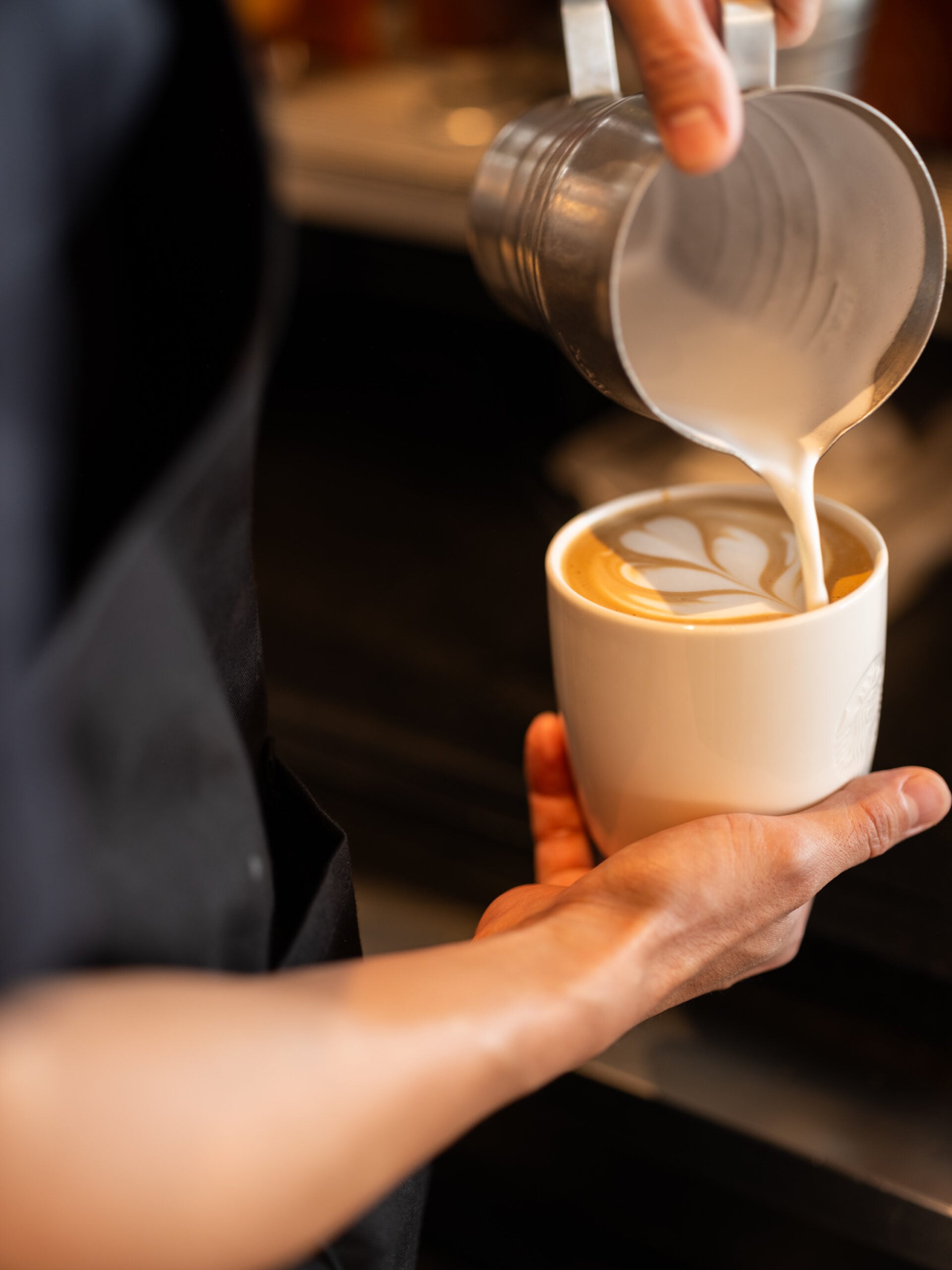
“Matthew just kind of acted like a surrogate in that moment,” said Harrell. “He was the brother I needed.””
Sean Harrell, Starbucks customer
Matthew, the barista, listened and then asked if he could give Harrell a hug.
“Matthew just kind of acted like a surrogate in that moment,” said Harrell. “He was the brother I needed.”
Harrell, who works as a professional recovery coach, was so moved that he took time to write a letter to a Starbucks leader about Matthew: “He held space with me and genuinely went to extra lengths to not only make me feel like the consumer, but truly a cared for customer,” he wrote.
For Matthew, taking care of his customers means really seeing the whole person. His very first coffeehouse leader at Starbucks always told partners, “This is your home. Take care of each other.”
It’s something he’s taken to heart.
“Anytime somebody feels safe enough to be vulnerable, I’m going to try to have a real conversation with them,” Matthew said. “We don’t know what other people are going through. We need to be there for each other.”
Burt’s 100th birthday
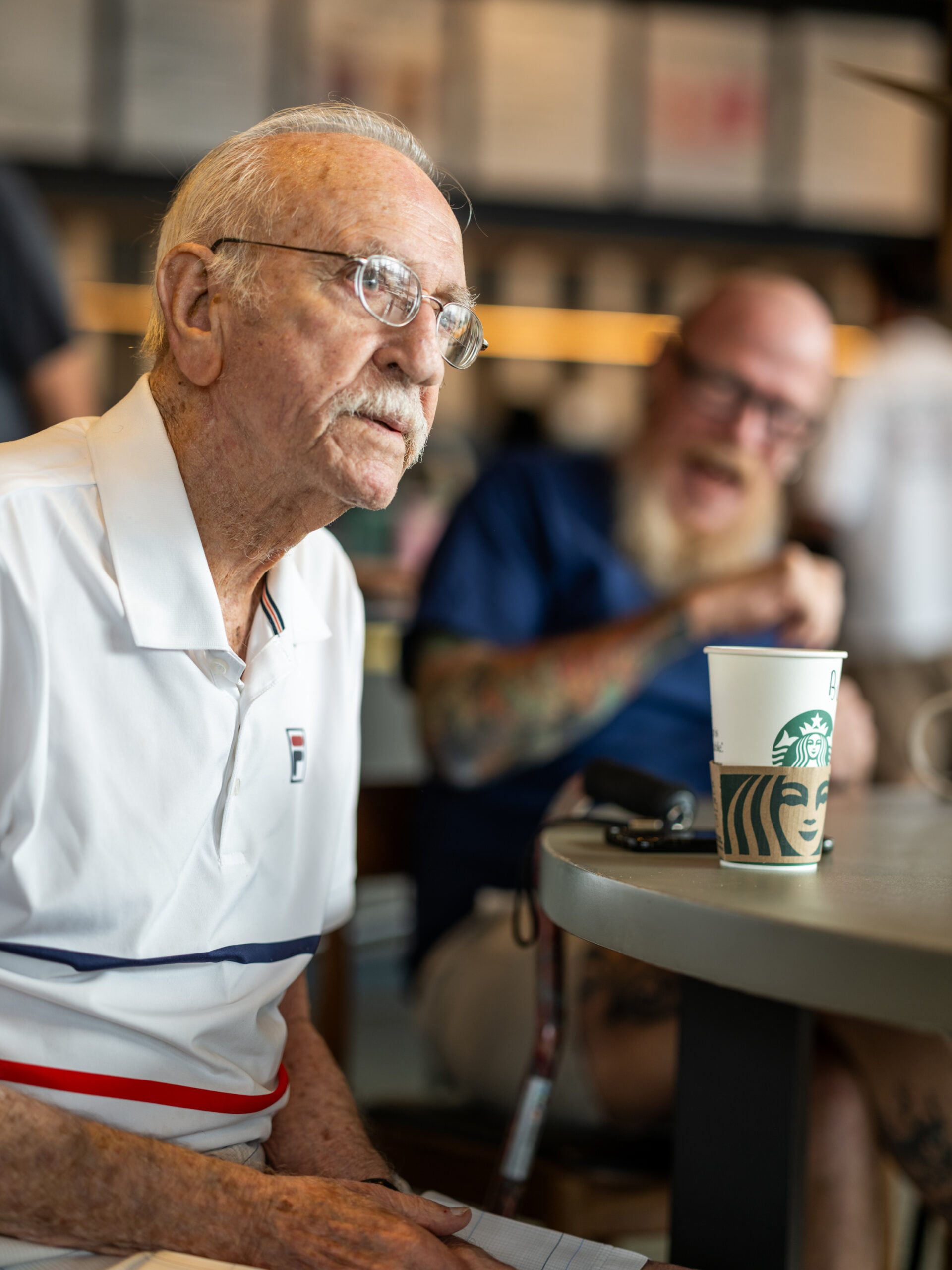
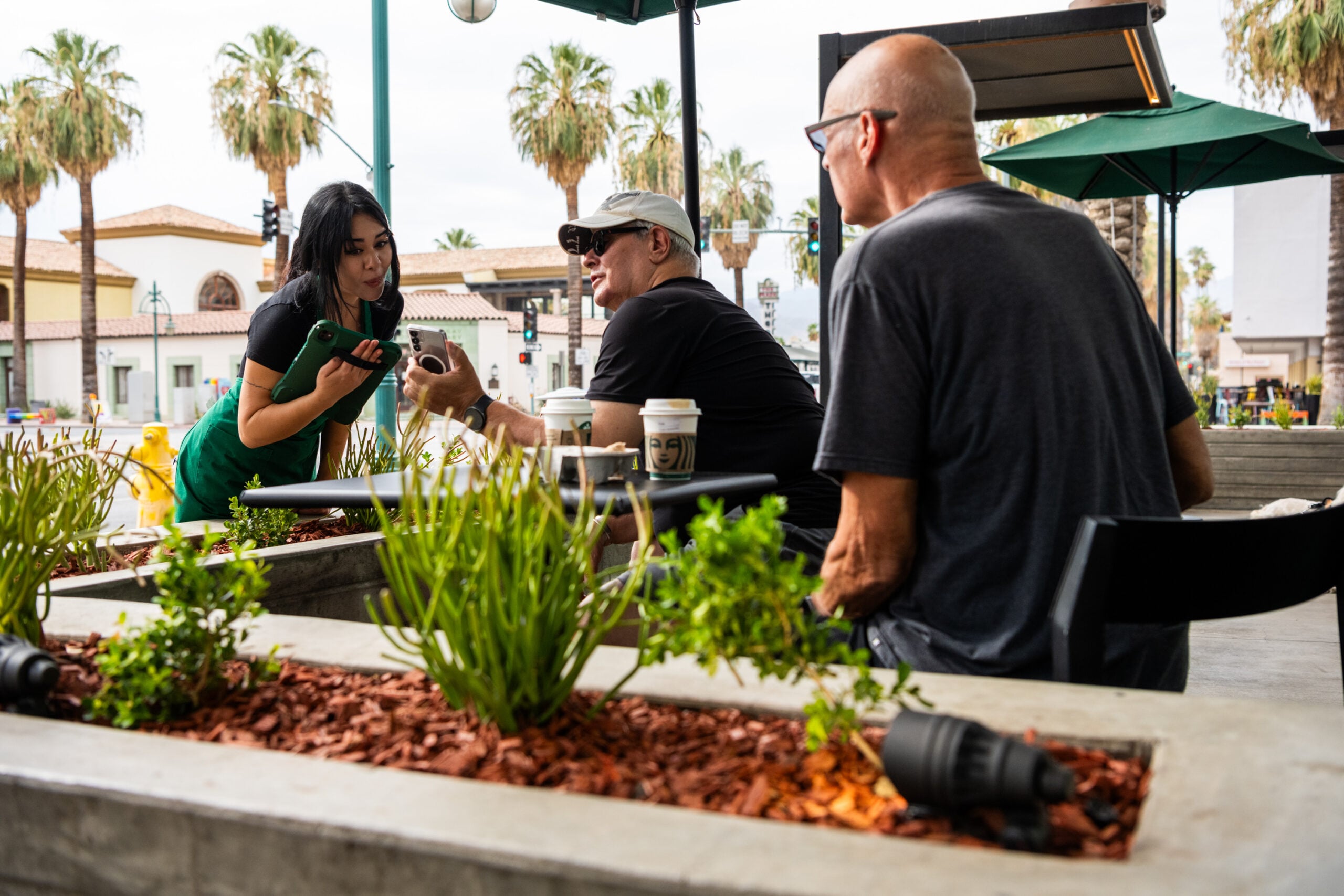
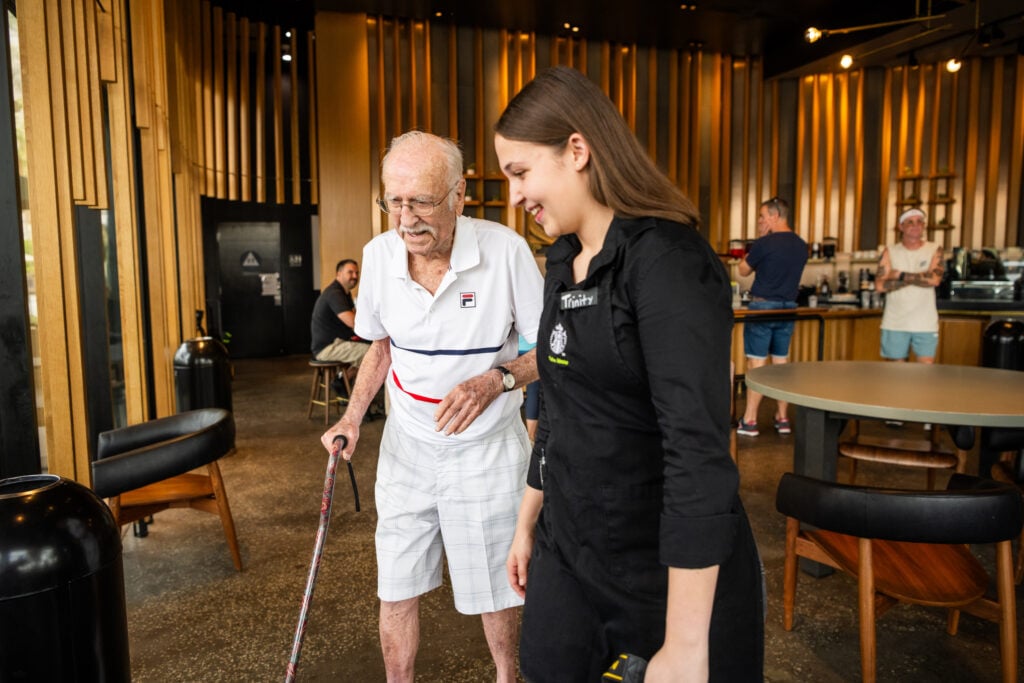
All the partners at the downtown Palm Springs Starbucks know the big round table, closest to the counter, is where Burt Spivack, 100 years old and the unofficial mayor of that Starbucks, will be sitting each morning. In fact, they even know what chair he likes best.
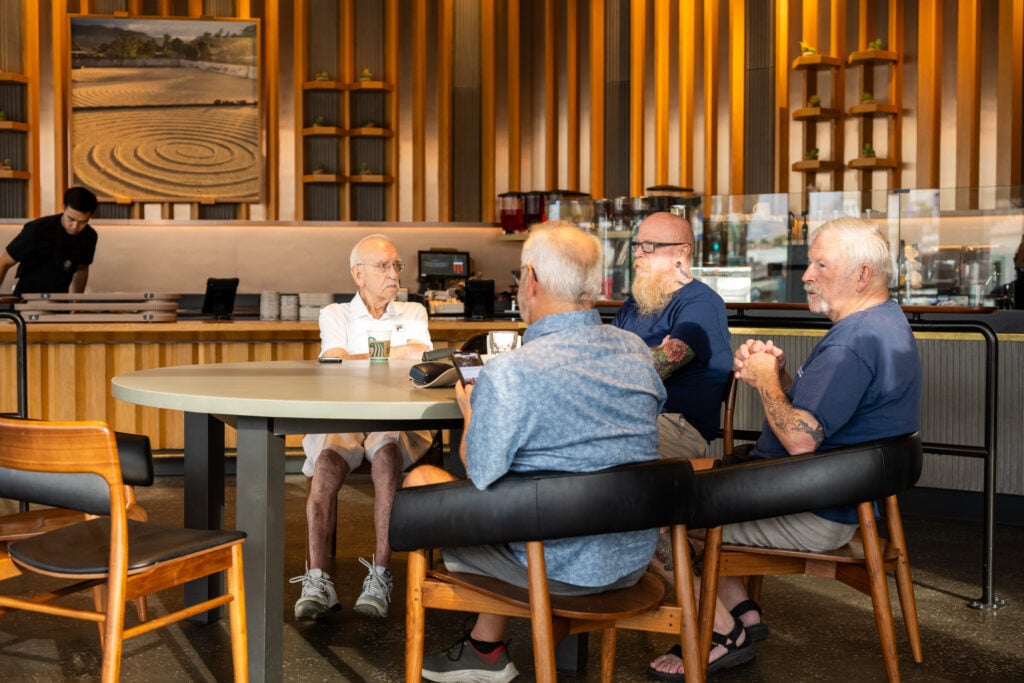
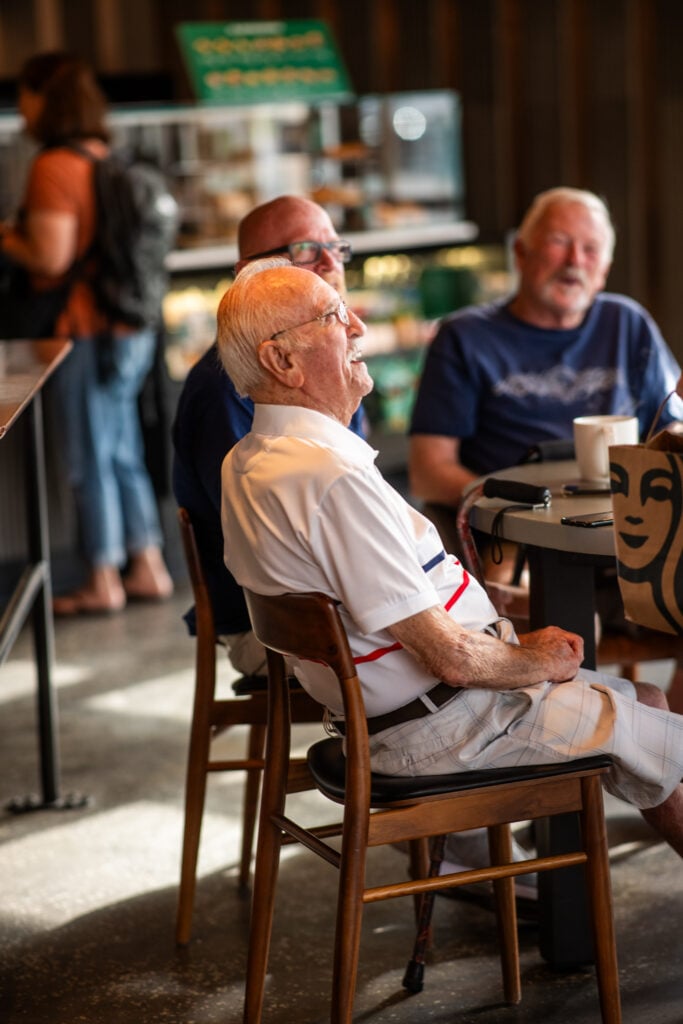
Spivack has been going to Starbucks every day for coffee (tall Blonde Roast, with two sweeteners and cream in a to-go cup, no lid) for the last 22 years — ever since Sandy, his wife and mother of their two children, died after decades of marriage.
He’s a beloved fixture and last November, the partners at the coffeehouse threw him a 100th birthday party, complete with giant balloons, cake and even bagpipes. Spivack and his friends sat at their usual table, taking it all in.
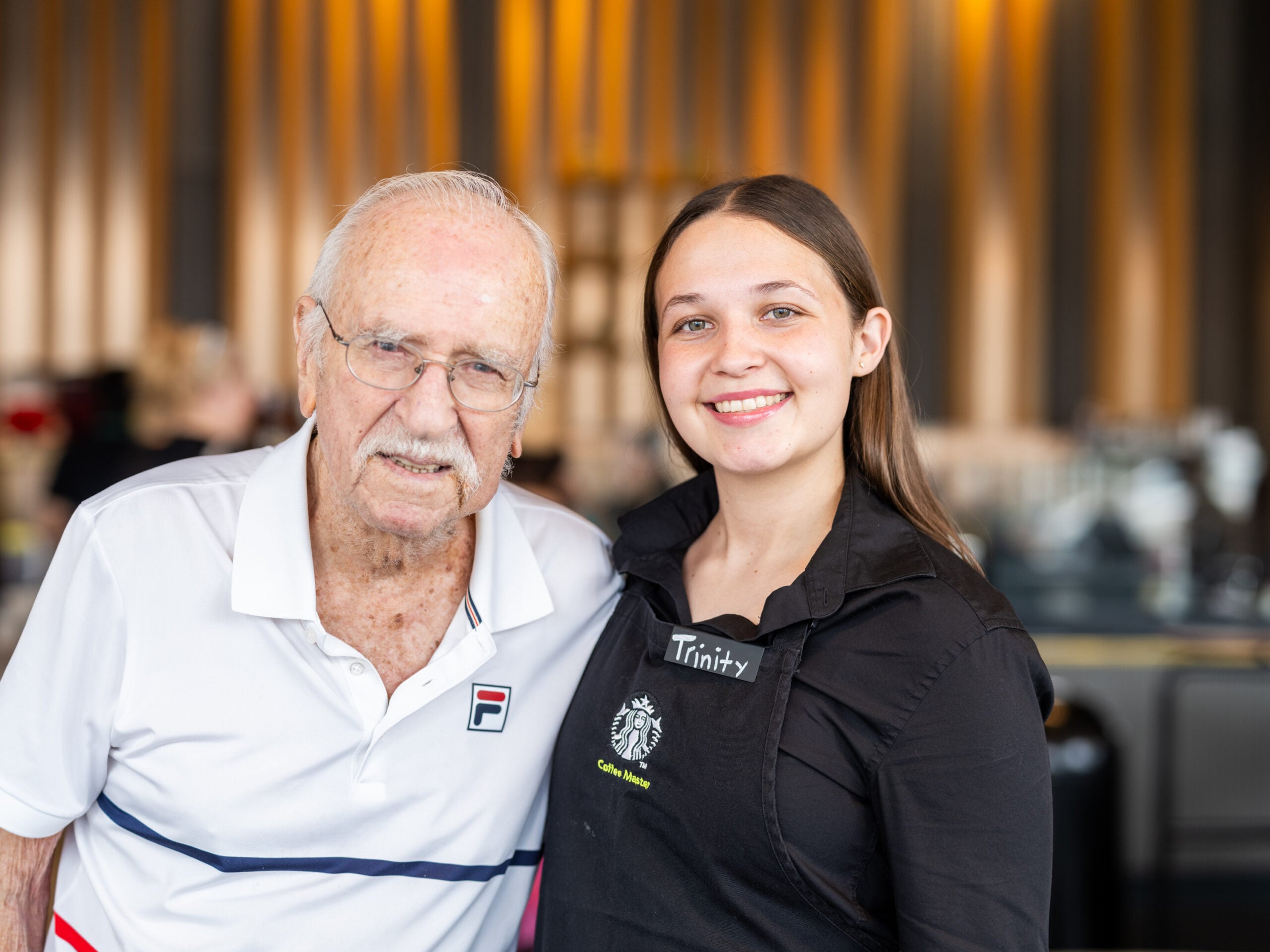
He’s just truly a pleasure. He always asks how I’m doing. He’ll always pick up conversation where we left off previously, and his smile is just so contagious.”
The coffeehouse leader, Trinity L., met Spivack when she started working for Starbucks as a barista four years ago when she was 16, her first job.
“My favorite regular is Burt,” she said. “I’ve seen him around here since I was a barista …. He’s just truly a pleasure. He always asks how I’m doing. He’ll always pick up conversation where we left off previously, and his smile is just so contagious.”
For Spivack, Starbucks isn’t just a place to get coffee but also where he meets old friends and makes new ones.
“I’m a people person,” he said. “If I see someone sitting alone, I ask if they want to sit by themselves, because sometimes they want to be on their own, or if they’d like to join me. A lot of them join me.”
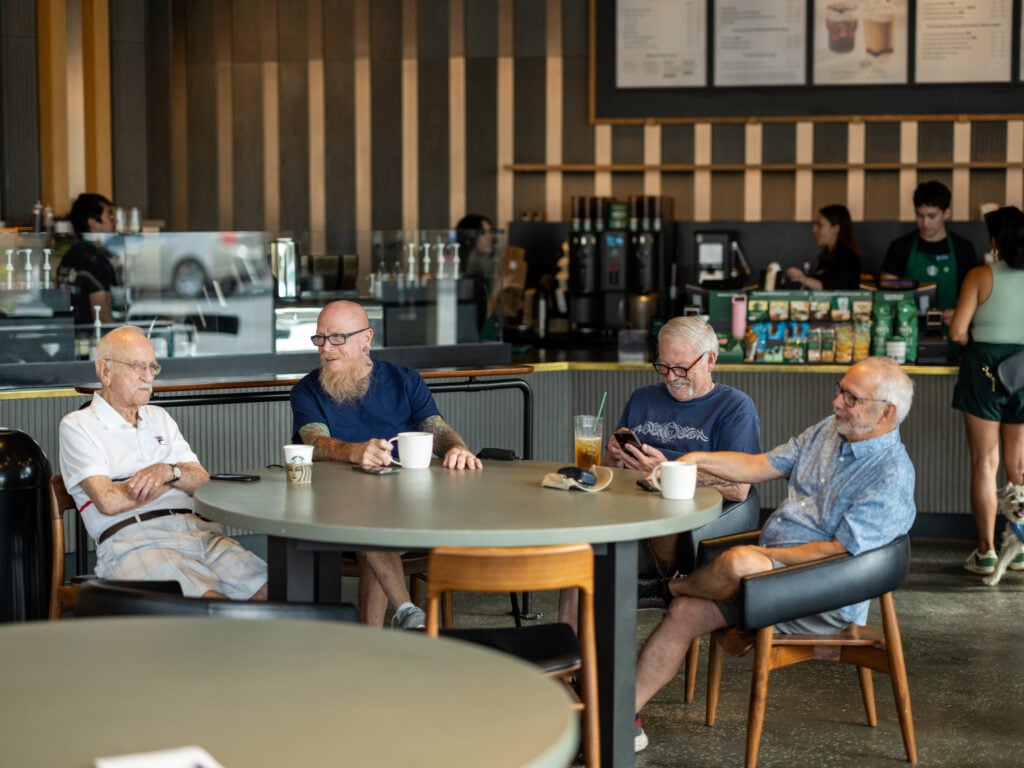
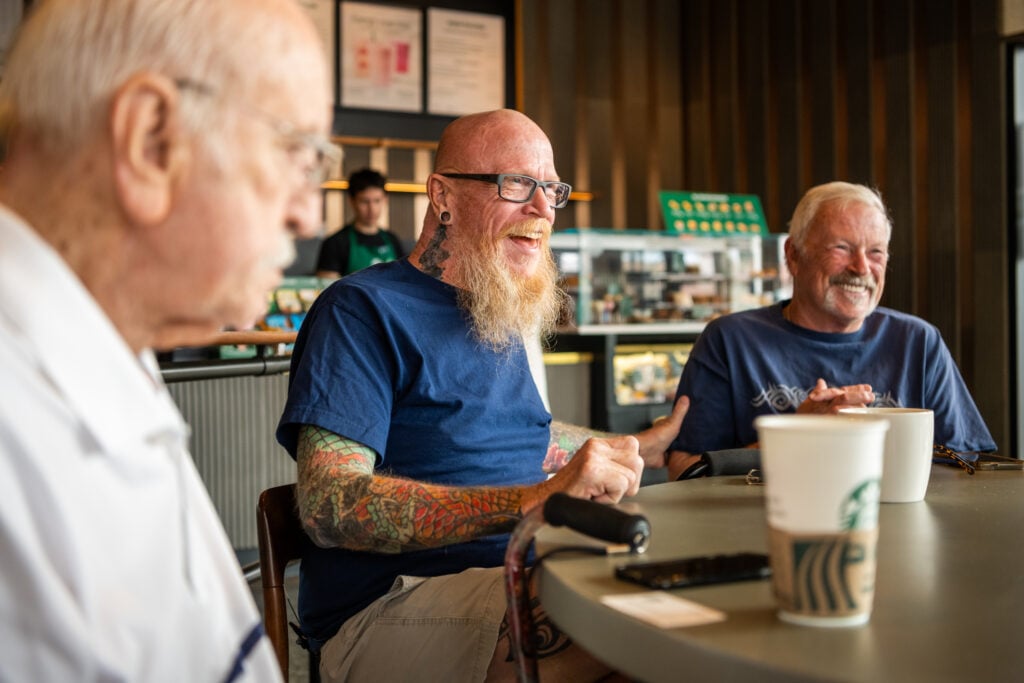
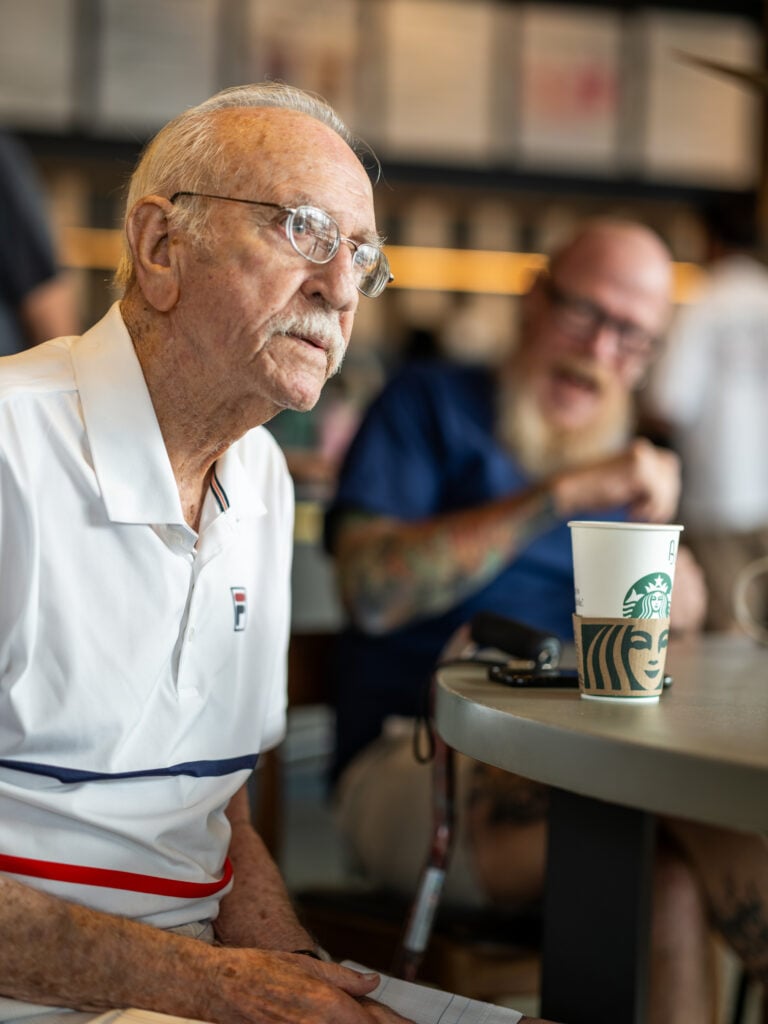
On this particular day, he’s with his friends, Stanley Mallard, Mallard’s husband, Scott McDonald, and John Tucker. He met all of them at Starbucks.
“Burt doesn’t like to see people sitting alone,” said Mallard. About four and a half years ago, Spivack “invited me to sit with him and then I just kept sitting.” He’s been having coffee with Spivack ever since on most mornings.
“It doesn’t stop here. It carries on,” added Mallard. The men regularly all have dinner together and watch out for each other.
“Friendships are very important to me,” said Spivack.
The downtown Starbucks is just a few blocks from the location of the hotel where Spivack worked for decades, first as a comptroller in the early 1960s and later as president and part owner. And just across the street from Starbucks, as part of the Palm Springs Walk of Fame is a star that says, “Burt Spivack, humanitarian/civic leader.”
“(Burt is) someone to look up to, someone to admire … So, it’s such a great friendship,” Mallard said. “You know, sometimes we chat away and sometimes we don’t. When you feel comfortable with people, you just like hanging out and have a wonderful time and always be there for someone if they need. That’s important in life.”
Trinity and the partners at the coffeehouse make all the customers feel at home, the group said.
“When we come in here, everyone says ‘hi’ and everyone seems to be having a good time at work,” said Mallard. “It makes you feel very welcome.”